


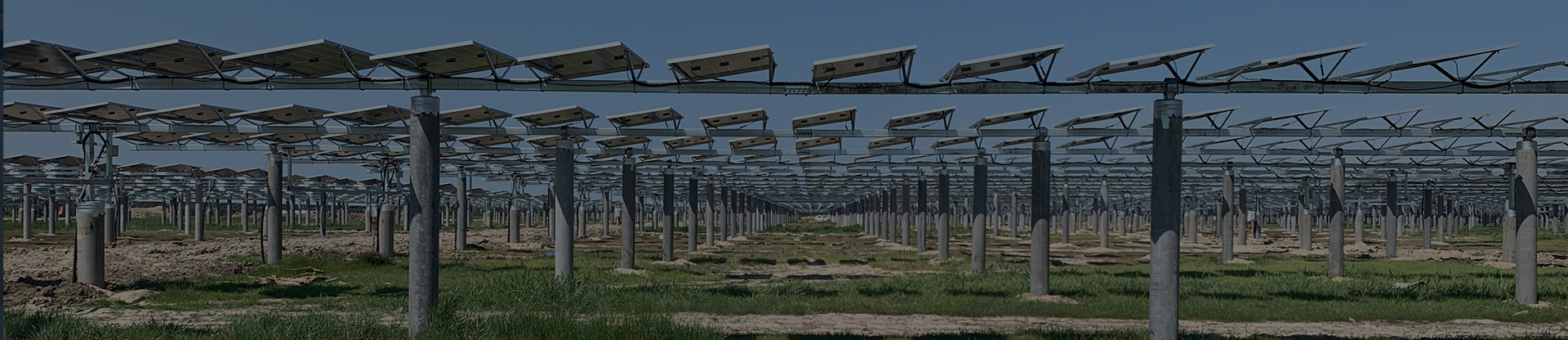
As solar technology continues to develop, the solar mounting system has become an increasingly important part of a solar project. A solar mounting system is not simply a structure used to hold solar panels. It determines the orientation, tilt, stability, and movement of solar panels, and therefore plays an important role in the overall performance and long-term reliability of a solar installation.
For project developers, EPC contractors, distributors, and solar installers, choosing the right solar mounting solution requires consideration of site conditions, solar panel configuration, wind and snow loads, terrain, installation requirements, and expected energy production.
What Is a Solar Mounting System?
A solar mounting system is a structural system designed to securely support solar panels and maintain them in the required position throughout the operating life of a solar project.
Depending on the application, solar mounting systems can be installed on rooftops, ground-mounted projects, agricultural facilities, commercial buildings, and utility-scale solar power plants.
A complete solar mounting system may include foundations, support poles, center beams, purlins, bearings, driving systems, and other structural or electrical components.
For ground-mounted projects, solar mounting systems are commonly divided into two major categories: fixed solar brackets and solar tracking systems.
Fixed Solar Bracket
A fixed solar bracket keeps the solar panels at a predetermined tilt and orientation. The angle is normally selected according to the project’s geographical location, solar resource, land conditions, and engineering requirements.
Because there are no moving components, fixed solar brackets have a relatively simple mechanical structure and are widely used in residential, commercial, and utility-scale solar projects.
The main advantages of fixed solar brackets include:
- Simple structural design
- Low mechanical complexity
- Straightforward installation
- Relatively low maintenance requirements
- Flexible applications for different project sizes
However, a fixed solar bracket cannot change the orientation of the panels as the sun moves across the sky. This means that the angle between sunlight and the panel surface changes throughout the day.
For projects where maximizing energy yield is a major consideration, solar tracking technology can provide an alternative solution.

What Is a Solar Tracking System?
A solar tracking system is a motorized solar mounting system that changes the orientation of solar panels according to the position of the sun.
Instead of keeping the panels at a fixed angle, a tracking system allows the solar panels to follow the sun during the day. This can increase the amount of solar radiation received by the panels compared with a fixed solar bracket, although the actual energy gain depends on location, weather conditions, system design, shading, and other project factors.
Solar tracking systems are generally divided into two main types: single-axis trackers and dual-axis trackers.
Single-Axis Solar Trackers
A single-axis tracker rotates the solar panel around one axis. In many ground-mounted applications, the tracker follows the sun’s movement from east to west during the day.
Compared with fixed solar brackets, single-axis trackers can provide increased solar exposure while maintaining a relatively practical mechanical configuration for large-scale projects.

Modern single-axis trackers can also incorporate backtracking technology.
Backtracking adjusts the tracking angle during periods when neighboring rows could cast shadows on each other. The objective is to reduce row-to-row shading and improve overall array performance.
Single-axis tracker is particularly suitable for large ground-mounted solar projects where energy yield, land utilization, and system economics need to be considered together.

Dual-Axis Solar Trackers
A dual-axis tracker can rotate the solar panel around two axes. This allows the system to adjust both the solar azimuth and elevation angles.
Unlike a single-axis tracker, which primarily follows the sun’s daily east-to-west movement, a dual-axis tracker can also respond to the sun’s seasonal changes in elevation. As a result, the solar panels can maintain a more direct orientation toward the sun throughout the day and across different seasons.
Dual-axis tracking is especially useful for applications where maximizing solar incidence and adapting to changing solar positions are important project objectives.
A dual-axis system normally involves more mechanical components and control functions than a single-axis tracker. Therefore, factors such as structural design, drive-system reliability, control accuracy, installation conditions, and maintenance requirements should all be considered during project planning.

What Should Be Considered When Choosing a Solar Mounting System?
There is no single mounting solution that is suitable for every solar project. The right choice depends on the project’s technical and commercial requirements.
- Site Conditions
Terrain, soil conditions, slope, wind speed, snow load, temperature, and environmental conditions should be evaluated before selecting a mounting structure.
- Solar Resource
The amount and distribution of direct and diffuse solar radiation at the project location can affect the potential benefits of tracking technology.
- Panel Configuration
Modern solar panels come in different sizes, weights, and electrical configurations. The mounting system should be compatible with the selected panel dimensions and project layout.
- Energy Yield
For projects focused on maximizing electricity production, tracking technology may offer advantages over fixed solar brackets. However, energy yield should always be evaluated together with installation cost, land requirements, maintenance, and system complexity.
- Structural Reliability
A solar mounting system must remain stable throughout its service life while withstanding environmental loads such as wind, snow, rain, and corrosion. Therefore solar mounting structures need to provide long-term structural support and durability.
Why Engineering and Customization Matter
A high-quality solar mounting system is not simply a collection of steel components. It is an integrated solution involving structural engineering, mechanical design, drive technology, control systems, installation methods, and project-specific optimization.
Different projects may require different structural configurations, tracking ranges, panel arrangements, foundation solutions, and control strategies.
For this reason, experienced solar mounting manufacturers should be capable of providing customized solutions based on actual project conditions rather than relying on a single standardized design.
Protracker: Intelligent Solar Tracking Solutions
Protracker, the brand of SHANDONG ZHAORI NEW ENERGY TECH. CO., LTD., focuses on solar intelligent tracking systems.
From single-axis tracking to dual-axis tracking, Protracker is committed to developing solar tracking technologies that combine structural stability, tracking performance, adaptability, and intelligent control.
As the solar industry continues to move toward higher efficiency and smarter power generation, solar mounting systems will play an increasingly important role in optimizing solar project performance.
The right mounting solution should not only support the solar panels—it should work together with the entire solar power system to achieve reliable, efficient, and long-term operation.
Protracker — Intelligent Tracking for a Smarter Solar Future.
Post time: Sep-22-2026