


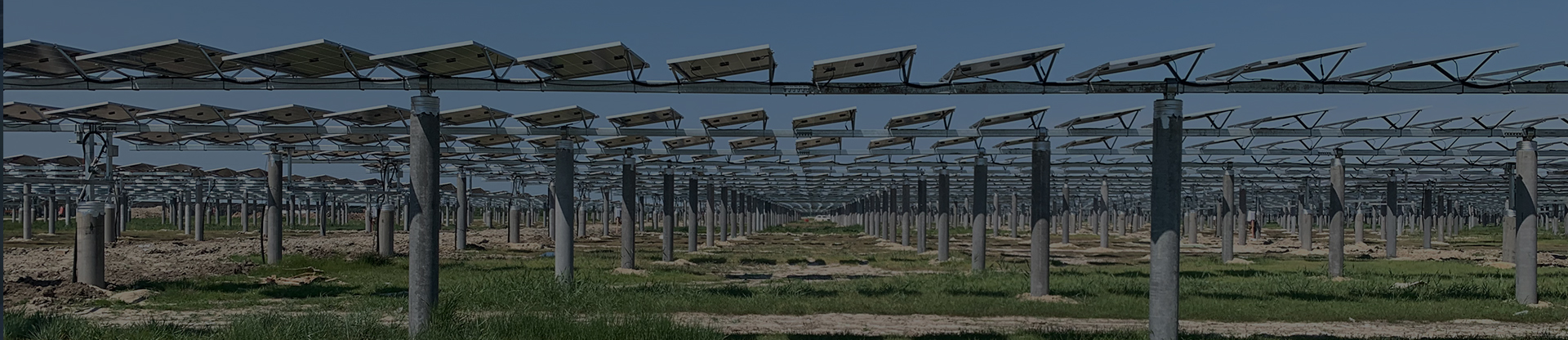

The concept of solar-photovoltaic co-generation is not a new one. The idea of solar-photovoltaic co-generation was first proposed 45 years ago, and it was put forward by Adolf Goetzberger, the founder of Fraunhofer ISE in Germany, along with Armin Zastrow. However, it was only about 10 years ago that large-scale commercial projects began to be implemented. Italy, China, the United States, and Japan have all started in this field, and they are currently the countries with the most cases. Now, more and more projects are beginning to be constructed.
The solar-photovoltaic co-generation project involves growing crops while generating electricity through solar power. This method enhances the utilization rate of the land. However, some projects have performed poorly due to design or component issues. In this article, we will jointly explore the key factors determining the feasibility of the solar-photovoltaic co-generation projects. We will also share with you some case experiences of our solar-photovoltaic support structures for agricultural co-generation projects.
What is solar-photovoltaic co-generation? - Why is the installation (support selection) the key point of the design?
Solar-photovoltaic co-generation is also known as dual-use solar farming or Agri-PV. It no longer simply uses the land for solar power generation or agricultural production. Instead, it raises the photovoltaic panels, increases the spacing, and enables agricultural planting, pastures, and livestock breeding activities to continue beneath the photovoltaic support structures.
This concept may seem simple, but actually implementing it in engineering is not easy. Why? Because each venue will be constrained by three factors simultaneously:
1. Light exposure
Different crops have different requirements for light. The same crop has different light requirements at different growth stages. For example, leafy vegetable crops can still maintain a good growth state under certain shade conditions. Cereals, such as wheat, are relatively tolerant to shade, while corn is a light-loving crop and has a higher demand for light radiation. The demand for light is particularly strong during the silking stage of corn and wheat. Under this dynamic light demand situation, photovoltaic tracking supports are the optimal choice. The specific reasons will be further discussed later.
From another perspective, some crops need light but are afraid of high temperatures. The shading effect caused by raising the photovoltaic panels on the solar panel mount helps to lower the soil surface temperature, reduce water evaporation, and to a certain extent, can reduce the high temperatures that crops are exposed to and solve part of the problem of insufficient water caused by rapid water evaporation, which has a positive effect on crop growth.
2.Passage space
For the passage of agricultural machinery such as tractors and harvesters, a passage space needs to be reserved and sufficient clearance height is also required. This space needs to be measured through experiments rather than determined solely by parameter data. Otherwise, problems will arise during actual use. Once the photovoltaic racking system is installed in large quantities successfully, these problems will be difficult to solve. The column-type structure of the tracking support is very suitable for creating an appropriate passage space for agricultural machinery.
3.The impact of PV racking on the soil
On one hand, the foundation structure and cable trenches of the photovoltaic supports will disturb the surface soil, and maintaining vehicle passage will compact the soil. On the other hand, the fixed inclined supports will pour rainwater along the same position during rainy days, and due to their fixed position and year-on-year strengthening, they will also have a negative impact on the soil. However, the tracking supports, because the photovoltaic panels can rotate with the changes of sunlight, the shadow and precipitation positions will also constantly change, and the spatial distribution will be more uniform.
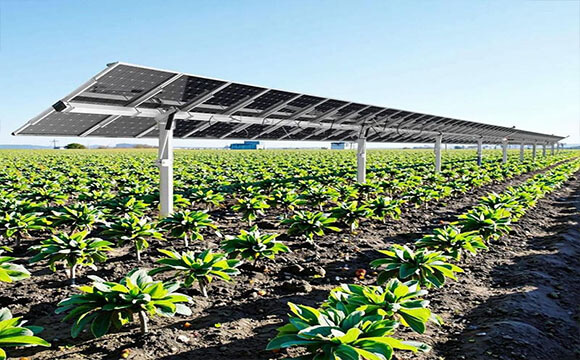
The PV racking system is a component that involves all three of these important factors. Through the individual analysis of these three factors, the tracking support system has a very obvious advantage in the field of agricultural photovoltaic supports. The selection of each component and the way of stringing will affect the power generation income of each photovoltaic (PV) system; while the PV racking system determines whether this piece of land can still be efficiently farmed. Therefore, we believe that the design of the agricultural-generational complementary project should start with the racking , rather than with the components.
Why are fixed PV racking not suitable for agricultural photovoltaic?
Fixed PV rackings are cheaper in price, so they are often chosen in many areas where land is cheap and abundant. However, in the application of agricultural photovoltaic, the disadvantages of fixed pv racking are obvious. First of all, the shading of fixed supports is static. Plants growing in shaded areas can only receive scattered light for a long time, which is not conducive to the growth of plants.
The standard height of fixed (photovoltaic) PV racking is usually only 0.8 to 1.5 meters. This height is only suitable for low-growing plants like grasslands or for raising small animals like sheep. It cannot meet the growth and breeding needs of vegetables, orchards, large animals, or the height requirements for mechanical operations.
Some people say that by widening the row spacing, the entry of light and the operation of agricultural machinery can be achieved. This is indeed a compromise solution. However, doing so will reduce the energy output per unit area, which is contrary to our original intention of efficiently utilizing land.
The PV tracker offers a better solution. When the controller of the solar tracking support rotates according to the direction of direct sunlight, the shadow will also move, ensuring that the crops in the lower layer space will not be in the shade all day long. Thus, they can enjoy sunlight exposure without having to endure the direct sunlight. At the same time, its height can reach about 4 meters. It is completely fine to grow tall crops and raise large animals such as cows and deer. Agricultural machinery can also be well applied.
Solar Tracker Configurations for Agrivoltaics
The following table compares the common configurations of different ground-mount racking in agricultural photovoltaic systems. (The figures represent the commonly used design range, not the extreme values. In actual projects, the designs need to be carried out based on the actual circumstances.)
| Configuration | Shade behaviour | Typical clearance | Typical row pitch | Best crop fit | Relative CAPEX |
| Fixed tilt | Static band on the same strip all season | 0.8–1.5 m | 3–5 m | Grass, pasture, shade-tolerant leafy crops | Lowest |
| 1P flat single-axis | Band sweeps across the field through the day | 2.0–3.0 m | 4–7 m | Vegetables, fodder, arable rotation | Medium |
| 2P / multi-drive single-axis | Wider swept band, fewer drives per MW | 2.5–3.5 m | 5–8 m | Row crops, vineyards, orchards | Medium |
| Dual-axis | Shade concentrated and repositionable in two axes | 2.5–4.0 m | 6–9 m | High-value horticulture, nurseries, research sites | Highest |
| Vertical bifacial | Light reaches the ground between rows all day | 1.5–2.5 m | 8–12 m | Pasture, strip farming, hay | Medium–high |
In the application of actual Agri-PV projects, the influence of different parameters on the processing results varies. The following three points require special attention.
1. Height is more important than angle
Increasing the height of photovoltaic mounting structures from 2.0 meters to 3.0 meters will be more effective than any algorithm for calculating and controlling shadows in improving crop compatibility, as it increases the space available for mechanical operations and reduces the shaded area of the photovoltaic panels.
2. Moving shade is better than reducing shade
PV tracking mounts provide more uniform light than fixed mounts. Crop yield stability depends on the uniformity of light, not on total photosynthetically active radiation (PAR).
3. PV Tracking mounts can reduce the overall structural weight
As a distributed layout,PV tracking mounts are spread across multiple locations on the land, reducing the torque on the main shaft and lessening the load on the foundation. In coastal areas, they can also mitigate resonance caused by swaying in strong coastal winds, which is particularly important for open farmland without shelter.
How to choose the tracking strategy for a photovoltaic tracking frame?
Now we have learned that photovoltaic tracking frames are the most suitable products for agricultural photovoltaics. However, not all tracking frames are suitable. So, which tracking strategy is the most effective and can maximize the sharing of sunlight between crops and the photovoltaic power station?
In the application of agricultural photovoltaic systems, the most useful function of the solar tracker is not how to better track the sun and obtain more direct sunlight, but rather when to track and when not to track, and how to adjust according to different weather conditions and the growth stages of crops.
1. Standard astronomical tracking
The solar tracker controller follows the movement of the sun, constantly obtaining the intensity of direct sunlight and maximizing the efficiency of solar energy. It is suitable for pastures, feed crops, and low-value rotation areas, with a priority given to energy utilization.
2. Planned light regulation
Within a pre-set time period, usually during the sensitive growth stage of crops, the photovoltaic solar tracker array will be tilted at a steeper angle, allowing more light to reach the plants. This usually results in a loss of some photovoltaic energy, but it ensures that the plants receive sufficient sunlight radiation during the stage when they need it the most, thereby increasing crop yields. During periods when crops are not sensitive to light, the photovoltaic tracking system remains in tracking mode.
3. Crop-oriented intelligent control
The tracking strategy of this photovoltaic tracking frame is more flexible. It can combine meteorological stations, short-term weather forecasts and crop growth calendars. It only adjusts the light window when the crop growth stage is needed. The areas outside these light windows adopt the tracking mode for maximum energy output. The scheduling will be optimized and adjusted at any time within the next 48 hours based on the light, wind speed and rainfall conditions in the future, without relying on a fixed schedule. It achieves uniform light and shadow, microclimate optimization, and enables predictability, planning and adjustability.
The core objective of the three tracking strategies for the PV mounting system is the same, which is that the system does not merely consider the crop yield, nor does it merely focus on the power generation income. Instead, it optimizes the overall site income, fully considering the actual total income of the investors.

The design parameters that determine the feasibility of the Agri-PV project
Before starting the construction of the new project, the following items need to be determined:
Height and row spacing
The height measurement is the distance from the datum plane of the terrain to the lowest edge of the photovoltaic solar racking array at the steepest angle. It should be noted that this is not the horizontal height. At the same time, an additional margin should be reserved for snow accumulation and the storage position of the solar tracker at night.
Row spacing and GCR (Gross Collector Ratio)
For a given GCR value, the wider the row spacing and the fewer the number of rows, the more light each row receives, but the lower the energy density per unit area. Most Agri-PV projects usually choose a GCR value between 0.3 and 0.6, with the lower half used for vegetable cultivation and the upper half for energy generation.
Solar Tracker Foundation
Generally, we use compacted piles or helical piles because this method does not require excavation, does not require soil removal, does not require curing time, and the surface soil can remain in its original position. Only when the foundation is made of hard rock or when artificial fill cannot be used for construction, will the concrete expansion foundation be adopted.
Wind, rain and snow
The open farmland has no shelter, so this solar racking structure needs to withstand strong wind forces. Therefore, when designing and manufacturing the PV racking support, it is necessary to have a survival-level wind resistance capability that exceeds local standards. In addition, the tracker also needs to have an excellent active protection strategy. Equipped with wind speed sensors and rain/snow sensors, and connected to the controller, it can automatically retract before the occurrence of wind and snow.
Module Specifications
The sizes of different photovoltaic panels vary, which determines the load and torque per unit area of the PV mounting structure. Especially with the increasing application of large-sized modules, there is a greater demand for larger-span rotation. This requires higher stiffness, stability, and mechanical interface of the PV mounting structure. When formulating the plan, factors such as the deflection of the main beam (self-weight / snow load / wind load), component spacing, drive torque selection, reducer, slewing bearing, and the lifespan of the linkage rod should be fully considered for thorough calculations.
Energy gain
Single-axis trackers typically offer 15% to 30% higher energy; dual-axis trackers may achieve energy gains of up to 30% to 45%.
Reference Case: 2.1 MW Agri-PV Project in the Campania Region of Italy
In March 2025, ProTracker delivered 265 sets of ZRP agricultural pv tracking system to an EPC contractor located in the Campania Region, south of Naples. The ZRD dual-axis tracking frame, ZRP-36, and ZRP-10 single-axis tracking frames were combined in this project, with a total installed capacity of approximately 2.1 MW.
The significance of this project configuration for Agri-PV projects lies in the fact that the site is not a single regular rectangular plot. The southern plots are often divided into irregular shapes due to roads, boundaries, and existing crops, which pose requirements for the design and layout of the pv tracking arrays. If a single row spacing is adopted, some corners cannot be utilized. Our company proposed using a drive and control platform to control three different row spacings, flexibly arranging the main array, medium-sized plots, and irregular corner areas to maximize the utilization of the land.
Each solar tracker system is equipped with a shock absorber to control the oscillation caused by wind force. The pile foundation is used, effectively avoiding the adverse effects of concrete construction on the land and soil disturbance.
Agri-PV Project Checklist
Due to the unique nature of Agri-PV systems, they experience more frequent malfunctions during operation compared to other photovoltaic systems. Therefore, after the project is completed and before it is handed over, the following six inspection tasks must be completed:
1. Soil and drainage investigation. Before the project layout, confirm the foundation rejection area, water accumulation area, and drainage path.
2. Crop growth calendar and growth control plan. This task should involve agronomists to discuss the adjustment window for light, rather than only having electricians perform the work.
3. Equipment testing to ensure that the widest agricultural tools can pass through the passage when the pv tracking system is at the maximum tilt angle.
4. Cable wiring. The cable bundles should be placed in protective conduits and must not be left in the furrow area.
5. Vegetation management, including grazing and crop harvesting, which can be carried out normally.
6. Clean water source to ensure the cleaning of photovoltaic panels and to prevent competition with crop irrigation water sources during the dry season.
Q&A
1.Will solar tracking devices reduce crop yields?
What it changes is the distribution of light, not just the reduction of light. The solar trackers sweep over the obstacles in the field, so the total solar radiation (PAR) reaching the crop canopy throughout the day is usually comparable to that of a fixed array under the same photosynthetically active radiation (GCR), while the uniformity of light is improved. Therefore, the impact on yields depends on the crop type, variety and growth stage - which is why light regulation operation scheduling is needed.
2.What should be the row spacing for agricultural photovoltaic projects?
In fact, there is no unified standard for the row spacing of Agri-PV projects. It should be calculated backward based on the type of crops and the photovoltaic equipment. The row spacing for each project should be calculated individually according to the specific situation. Usually, the method is as follows: the width of the canopy layer plus the mechanical width plus the safety gap gives the lane width; then add the number of module rows to get the spacing. The spacing for commercial Agri-PV land is generally between 4 and 8 meters.
3.Are dual-axis trackers suitable for Agri-PV projects?
Without considering the economic investment budget, dual-axis trackers are indeed more suitable for agricultural photovoltaic projects. However, we usually take into account comprehensive factors. When the value of each hectare of crops is high and the light management can bring income benefits, dual-axis trackers are a worthy investment choice, such as nurseries, high-value horticultural crops, research and demonstration bases. For pasture and rotation farmland, single-axis trackers combined with adjustable gaps usually provide a higher return on investment.
4.Can farm machinery pass under the tracker array?
Yes, this is a factor that needs to be considered at the design stage. The lane width design takes into account the maximum size of agricultural machinery equipment, and the solar tracking brackets have a retraction function. The design height is verified through actual machines rather than being assumed based only on catalog heights and mechanical parameters.
5.ProTracker designs and manufactures single-axis and dual-axis tracking systems for agricultural, commercial and utility-scale projects, focusing on the manufacturing of solar trackers for 16 years. It has rich design and manufacturing capabilities and has provided tracking brackets for numerous engineering projects, with rich construction experience. If you are planning an Agri-PV project, our engineering team can conduct analysis and research on spacing, inclination and control schemes based on your crop plan and on-site data for you.
Post time: Nov-08-2026